

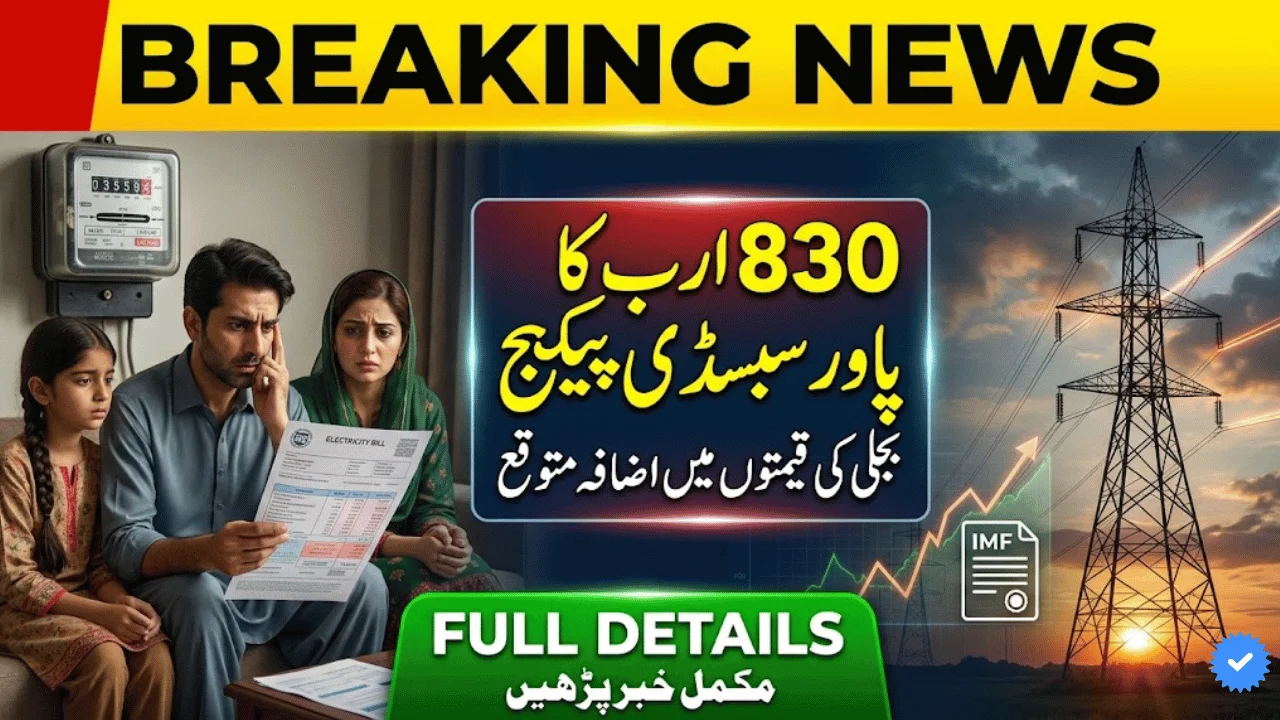
Electricity bills have become one of the biggest financial burdens for households in Pakistan. From small shopkeepers to middle-class families, everyone is feeling the pressure of rising energy costs. In this situation, the announcement of the IMF power subsidy Pakistan 2026 has caught public attention—but it comes with both relief and concern.
While the government has been allowed to allocate Rs. 830 billion for power subsidies, there are strong signals that electricity tariffs could increase in the near future. Let’s break down what this means in practical terms.
What Is the Rs. 830 Billion Power Subsidy?
The approved subsidy is part of Pakistan’s broader financial arrangement with the International Monetary Fund (IMF). It allows the government to support the power sector and reduce immediate pressure on consumers.
Where Will This Subsidy Be Used?
The amount is expected to cover:
- Electricity price differences (tariff gap)
- Losses due to theft and poor recovery
- Support for agriculture (tube wells)
- Settlement of circular debt
Why This Matters
Without subsidies, electricity prices could increase sharply, making it difficult for many families to afford basic energy needs.
Why Electricity Prices May Still Increase
Despite the subsidy, a key condition has been introduced:
Electricity tariffs may rise in 2027.
Reasons Behind Potential Increase
- Rising global fuel and energy costs
- Pressure to reduce government spending
- Need to fix long-term power sector inefficiencies
Expert Insight
Subsidies provide temporary relief, but structural reforms often lead to price adjustments later.
Understanding Circular Debt Problem
One of the biggest issues in Pakistan’s energy sector is circular debt.
What Is Circular Debt?
It occurs when:
- Power companies don’t receive full payments
- Losses accumulate across the system
Current Situation
- Billions of rupees are added each year
- The government aims to control it by 2031
Real-Life Impact
If circular debt is not controlled, electricity prices may continue to rise in the long run.
Who Will Benefit from the Subsidy
The subsidy is not distributed directly to individuals but helps reduce overall system costs.
Indirect Beneficiaries
- Low-income households
- Farmers using electric tube wells
- Small businesses
Example
A farmer using electricity for irrigation may pay less due to government support on power tariffs.
Short-Term Relief vs Long-Term Reality
| Aspect | Short-Term Impact | Long-Term Impact |
|---|---|---|
| Subsidy | Lower bills | Temporary relief |
| Tariff Increase | Not immediate | Possible rise in future |
| System Reform | Limited | Necessary for stability |
This shows that while relief exists now, future adjustments are expected.
What This Means for Consumers
In the Short Term
- Electricity bills may remain somewhat stable
- Government support will continue
In the Long Term
- Tariff increases are likely
- Energy costs may rise further
Practical Advice
- Reduce electricity usage where possible
- Invest in energy-saving appliances
- Consider alternative solutions like solar energy
Common Concerns and Misconceptions
- “Subsidy means electricity will stay cheap forever” → Not true
- “Prices will increase immediately” → Changes may take time
- “Only rich sectors benefit” → Subsidy targets broader system stability
FAQs – What People Are Asking
What is IMF power subsidy Pakistan 2026?
It is a Rs. 830 billion allocation to support the electricity sector.
Will electricity prices increase?
There is a strong possibility in 2027.
Who benefits from this subsidy?
Consumers indirectly benefit through controlled electricity costs.
Why is subsidy needed?
To manage high energy costs and system inefficiencies.
What is circular debt?
It is unpaid financial obligations within the power sector.
Conclusion
The IMF power subsidy Pakistan 2026 provides much-needed short-term relief for a struggling energy sector and its consumers. However, it also highlights deeper structural challenges that cannot be ignored.
For everyday citizens, the key takeaway is clear: while the subsidy may help stabilize bills for now, preparing for future price changes is essential. Smart energy use and awareness will play a major role in managing household expenses in the coming years.