
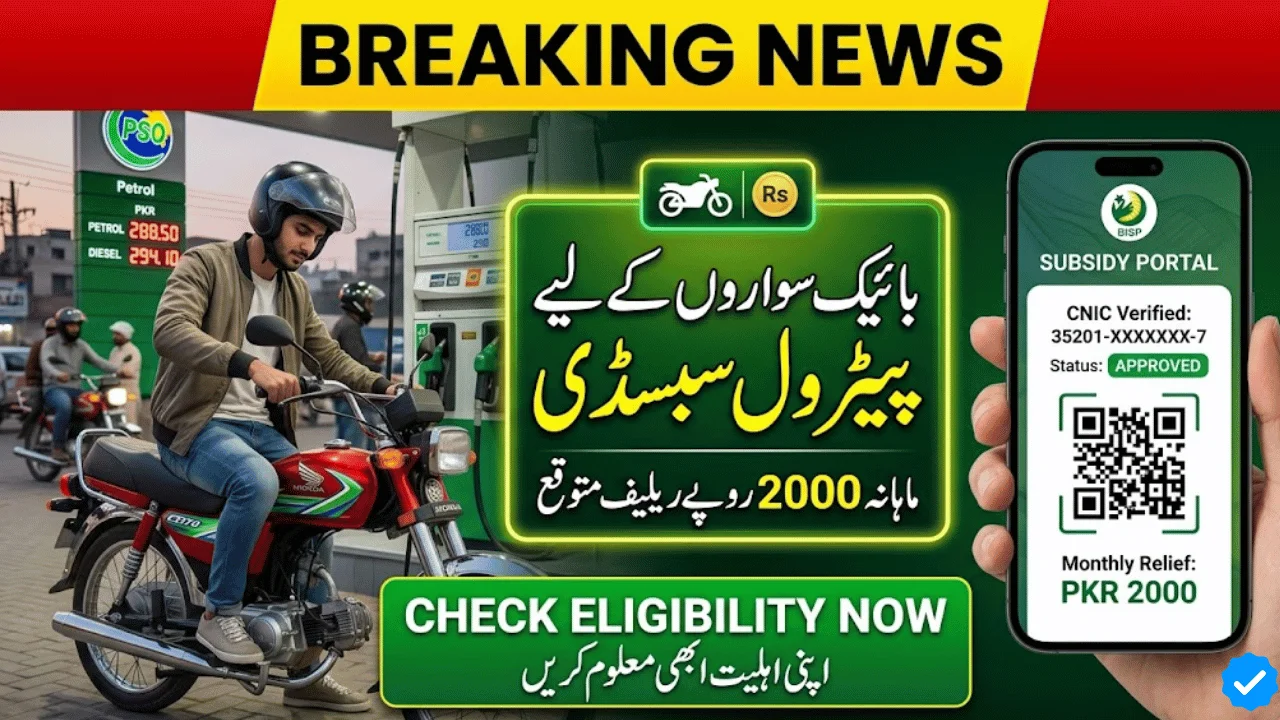
With petrol prices continuously rising in Pakistan, daily commuters—especially motorcycle riders—are facing serious financial pressure. For many, fuel expenses now take up a large portion of their monthly income. In response, discussions around a petrol subsidy for bike riders 2026 have gained attention, particularly the idea of delivering this relief through the Benazir Income Support Programme (BISP).
But how realistic is this plan, and what could it mean for ordinary citizens? Let’s break it down in a practical and clear way.
Why Petrol Subsidy is Being Considered
Fuel is no longer just a transportation cost—it directly affects livelihoods.
Real-Life Example
A delivery rider earning Rs. 35,000–40,000 monthly may spend:
- Rs. 8,000–12,000 on petrol
This leaves very little for savings or household expenses. A targeted subsidy could significantly reduce this burden.
Proposed Petrol Subsidy Plan for 2026
The government is exploring a model where eligible bike riders receive monthly financial relief for fuel.
Expected Key Features
- Subsidy up to 20 liters per month
- Discount around Rs. 100 per liter
- Monthly benefit close to Rs. 2,000
- Digital system for verification
Although still under discussion, the plan focuses on targeted support instead of general price reduction.
Will BISP Be Used for Fuel Subsidy?
The Benazir Income Support Programme (BISP) already supports millions of low-income families. Because of its existing database and verification system, it is being considered as a delivery channel for petrol subsidy.
Why BISP is Suitable
- Verified data of low-income households
- Established payment system
- Nationwide coverage
However, the final decision has not yet been officially confirmed.
How the System May Work
The proposed system is expected to be digital and user-friendly.
Step-by-Step Process (Expected)
- Register using CNIC via mobile app or SMS
- Verify identity through government database
- Receive confirmation of eligibility
- Visit petrol pump
- Get subsidy through QR code or digital verification
This system aims to ensure transparency and prevent misuse.
Who Will Likely Qualify
The subsidy is expected to focus on those who need it most.
Eligibility Criteria (Expected)
- Low-income individuals
- Motorcycle registered in applicant’s name
- Valid CNIC
- Not receiving multiple government subsidies
Target Groups
- Delivery riders
- Students
- Daily wage earners
- Small business workers
Challenges in Implementation
While the idea is promising, there are practical challenges.
1. Technical System Issues
Developing a smooth digital system requires strong infrastructure.
2. Data Accuracy
Incorrect or outdated data can lead to wrong eligibility decisions.
3. Fraud Prevention
Ensuring subsidy reaches only genuine users is critical.
Expert Insight
Without a reliable digital framework, targeted subsidy programs can face delays or misuse.
Petrol Subsidy vs Price Reduction
| Approach | Benefit | Limitation |
|---|---|---|
| General Price Cut | Helps everyone | Expensive for government |
| Targeted Subsidy | Focused support | Requires strong system |
Targeted subsidies are more efficient but harder to implement.
What This Means for Citizens
If implemented properly, this subsidy can:
- Reduce monthly fuel expenses
- Support low-income households
- Improve financial stability
However, citizens should wait for official announcements before taking action.
FAQs – What People Are Asking
Will petrol subsidy be given through BISP?
It is under consideration but not officially confirmed yet.
How much subsidy will bike riders get?
Around Rs. 2,000 per month (expected).
Who will be eligible?
Low-income motorcycle owners.
How to apply for petrol subsidy?
Likely through mobile app or SMS system.
When will the subsidy start?
No official launch date has been announced yet.
Conclusion
The idea of a petrol subsidy for bike riders 2026 through BISP reflects the government’s attempt to ease the financial burden of rising fuel prices. While the plan shows promise, its success will depend on proper implementation, transparency, and a reliable digital system.
For now, it’s important to stay informed and rely only on official updates. If executed effectively, this initiative could provide meaningful relief to millions of Pakistanis struggling with daily fuel costs.